How ToF Technology Enables Smart Fitness and Non-Contact Motion Analysis
(2025年12月29日)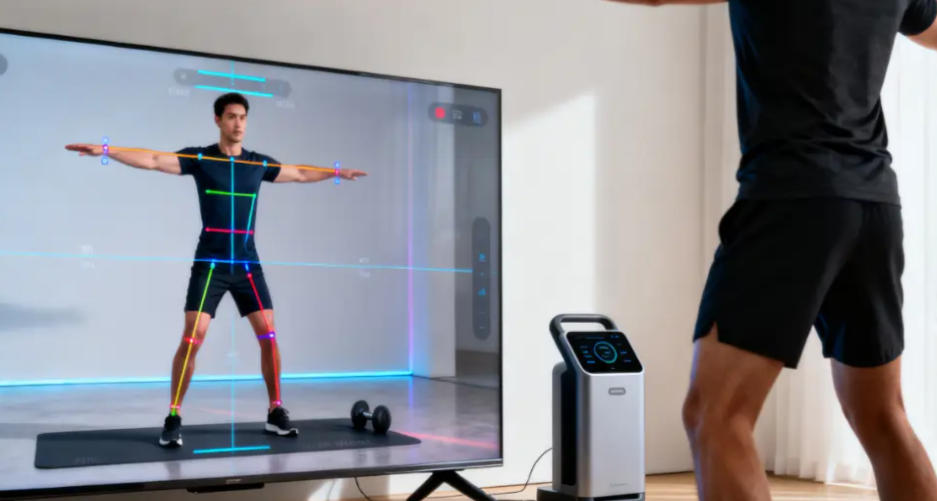
Smart Fitness & Motion Analysis: How ToF Depth Cameras Power Contactless Motion Tracking
As fitness training, sports science, and rehabilitation medicine continue to evolve, non-contact motion analysis has become a core requirement for next-generation smart health systems. Traditional motion tracking solutions—such as RGB cameras or wearable sensors—often face challenges including lighting sensitivity, motion occlusion, user discomfort, limited accuracy, and privacy risks.
With the rapid adoption of ToF (Time-of-Flight) depth sensing technology, smart fitness systems are entering a new phase of development. ToF enables high-precision, contactless motion capture, real-time posture analysis, and AI-driven performance feedback—providing scientific, quantitative support for fitness training, injury prevention, and rehabilitation therapy.
What Does SMART Fitness Really Mean?
Smart, Connected, and Data-Driven Fitness Systems
In modern health technology, SMART Fitness refers to the integration of:
ToF depth cameras
AI pose estimation algorithms
Motion sensors and biosensors
Big data analytics
Cloud computing platforms
Together, these technologies create an intelligent fitness ecosystem capable of real-time movement tracking, posture recognition, energy consumption analysis, and training optimization.
Smart fitness mirrors, AI treadmills, and intelligent exercise platforms can now:
Analyze body posture and movement quality in real time
Evaluate training intensity and movement accuracy
Automatically generate personalized workout plans
Provide instant visual, audio, or on-screen correction feedback

As a result, SMART Fitness represents a personalized, interactive, and data-driven approach to physical training and long-term health management.
Applications of ToF Technology in Motion Capture and Posture Analysis
Why ToF Depth Cameras Are Ideal for Motion Recognition
ToF (Time-of-Flight) technology calculates distance by measuring how long emitted infrared light takes to reflect back from an object. This process generates high-accuracy 3D depth maps, enabling precise reconstruction of human body structure and motion trajectories.
Compared with traditional 2D cameras or stereo vision systems, ToF motion capture offers stronger robustness, faster response, and higher spatial accuracy—making it a key technology in smart fitness equipment, posture analysis systems, and rehabilitation motion platforms.
1. Smart Fitness Training and Real-Time Motion Monitoring
Real-Time 3D Motion Capture and Skeleton Tracking
ToF depth sensors can generate a 3D skeletal model of the human body within milliseconds. Movements such as squats, lunges, push-ups, yoga poses, and strength training exercises are tracked dynamically.
Combined with AI pose estimation and motion recognition algorithms, the system accurately calculates:
Joint angles
Movement speed and rhythm
Range of motion (ROM)
Balance and stability
This enables high-precision, real-time motion analysis even during complex or fast exercises.
Form Detection and Posture Error Correction
Using predefined standard motion models, the system automatically compares user movements against ideal posture data.

For example:
Detecting knee-over-toe issues during squats
Identifying rounded backs in deadlifts
Recognizing asymmetrical movements during lunges
Once an error is detected, the ToF-based system delivers instant feedback, helping users correct form and reduce injury risk.
Smart Scoring and AI-Based Training Guidance
By integrating ToF depth data with AI analytics, smart fitness platforms can:
Score movement accuracy and consistency
Track performance improvement over time
Deliver personalized optimization suggestions
Users can review detailed training reports via fitness apps or smart mirrors, making progress measurable, scientific, and goal-oriented.
2. Motion Posture Analysis and Rehabilitation Training
3D Posture Reconstruction and Joint Motion Evaluation
In rehabilitation and physical therapy, ToF-based motion analysis systems provide clinicians with accurate, objective movement data.
The system captures:
Real-time joint positioning
Movement trajectories
Range of Motion (ROM) metrics
This allows therapists to assess mobility limitations, joint stiffness, and recovery progress with high precision.
Symmetry Analysis and Movement Quality Assessment
By comparing left and right limb motion curves, ToF systems can evaluate:
Limb symmetry
Coordination levels
Balance and motor control
These insights are essential for post-injury rehabilitation, neurological recovery, and long-term physical therapy planning.
Fully Non-Contact Rehabilitation Monitoring
Unlike wearable sensors, ToF motion tracking requires no physical contact. Patients simply move within the camera’s field of view, improving comfort, safety, and compliance—especially for elderly users or long-duration rehabilitation sessions.
3. Real-Time Feedback and Long-Term Motion Data Analysis
AI-Driven Performance Evaluation and Motion Optimization
AI models process ToF depth data to analyze:
Joint angle variations
Body center-of-gravity shifts
Stability and balance indicators
The system delivers real-time feedback and adaptive training suggestions, enhancing training efficiency and reducing injury risk.
Smart Device Integration and Cross-Platform Connectivity
ToF depth sensing technology is widely used in:
Smart fitness mirrors
AI personal trainers
Intelligent treadmills
Interactive home gym systems
By integrating motion sensors and cloud platforms, users benefit from immersive, interactive, and intelligent training experiences.
Cloud-Based Motion Tracking and Personalized Optimization
All motion data can be securely stored in the cloud, enabling:
Long-term performance tracking
Trend analysis and progress visualization
AI-driven adjustment of training plans

This supports truly personalized fitness guidance and adaptive rehabilitation programs.
Technical Advantages of ToF for Smart Fitness and Motion Analysis
1. Real-Time 3D Depth Sensing with Millisecond Accuracy
30–60 FPS depth capture for smooth motion tracking
Accurate performance during fast movements
Reliable operation under low light or bright sunlight
Full-body joint angle and skeletal mapping
2. Low Power Consumption for Smart Devices
Energy-efficient infrared emitters
Adaptive frame rate control
Ideal for smart mirrors, fitness equipment, and portable devices
3. Safe, Contactless Motion Monitoring with Privacy Protection
No wearables or skin contact required
Depth-only data capture (no facial details)
Suitable for gyms, clinics, and public spaces
Technical Challenges and Optimization Strategies
Occlusion Handling
Multi-view ToF camera deployment
AI-based skeletal compensation
Predictive posture reconstruction
Ambient Light Interference
Narrowband optical filtering
Dynamic exposure control
Multi-frame depth denoising
High-Speed Motion Adaptation
High-frame-rate depth sensors
AI motion interpolation
Low-latency time synchronization
Manufacturer Recommendations for ToF-Based Fitness Systems
Integrate AI skeletal reconstruction and motion classification
Combine ToF with IMU, heart rate sensors, and RGB cameras
Deploy edge computing for low-latency feedback
Future Outlook: ToF + AI + Wearables Driving the Next Fitness Revolution
As ToF depth cameras, AI motion recognition, and wearable technologies continue to converge, smart fitness and rehabilitation systems will achieve new levels of accuracy, safety, and personalization.
Key trends include:
AI-powered smart fitness mirrors
Quantifiable digital rehabilitation platforms
Cloud-based motion data analytics
Intelligent health and performance management
With its high accuracy, real-time responsiveness, low power consumption, and contactless operation, ToF technology is becoming the backbone of next-generation smart fitness and motion analysis systems, reshaping how humans train, recover, and interact with intelligent machines.
https://tofsensors.com/collections/time-of-flight-sensor/products/rgbd-3d-camera
- このできごとのURL:


コメント