TOF 3D Vision Powers Precision Agriculture for a Smart, Sustainable Future
(2025年08月11日)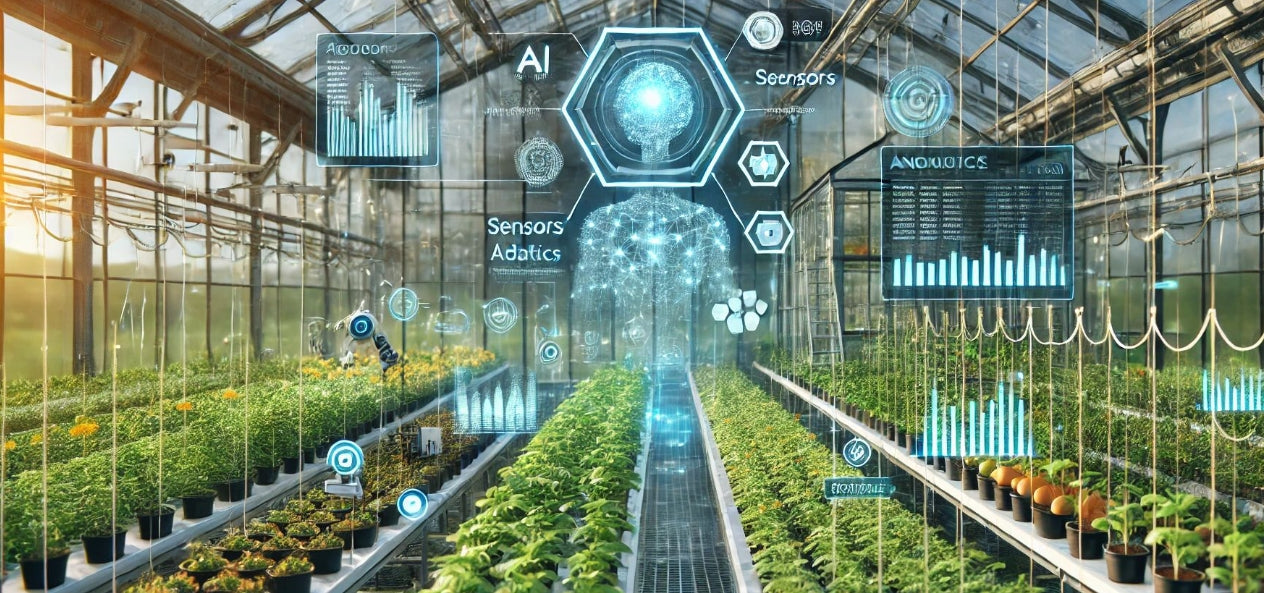
Introduction: From Green Fields to Digital Landscapes
Global agriculture is undergoing a historic transformation. Climate change, resource constraints, labor shortages, and population growth have exposed the limitations of traditional large-scale farming. Enter precision agriculture — a data-driven, technology-rich approach that combines TOF (Time-of-Flight) 3D cameras, RGB-D sensors, LiDAR, AI analytics, and autonomous machinery to manage crops with surgical precision.
With TOF 3D imaging, farmland is no longer perceived as an indistinct “green mass.” Every field, plant, and soil contour becomes a measurable, analyzable data asset. Whether it’s monitoring soil health, tracking plant growth in smart greenhouses, or enabling drones and ground robots to work in unison, TOF technology is rapidly becoming the sensory backbone of smart agriculture.
1. Smart Agriculture and the Precision Farming Revolution
The global push for food security and sustainability is accelerating the adoption of precision farming, where every resource — from water to fertilizer — is applied exactly where and when it is needed.
Why precision agriculture is rising:
Climate volatility is making crop yields unpredictable.
Population growth is increasing demand for food by billions of tons.
Labor shortages are forcing farms to turn to automation and robotics.

The Role of 3D Vision in Modern Farming
3D vision systems — built from TOF cameras, RGB-D sensors, and LiDAR — act as the “eyes” of autonomous farming machinery. By generating real-time spatial data, these systems enable robots, drones, and AI software to see, measure, and act with precision.
Applications of 3D Vision Systems Across Industries
While agriculture is a key growth area, 3D vision is also transforming:
Automation & logistics: Object detection and robot navigation
Autonomous vehicles: Path planning and obstacle avoidance
Industrial quality control: Detecting defects in manufacturing
Warehouse management: High-precision object positioning
Compared with 2D vision, 3D vision offers richer spatial awareness, making it invaluable for unstructured environments like farms.
2. TOF for Soil Modeling, Crop Identification, and Growth Metrics
TOF 3D cameras operate by emitting infrared light and measuring its return time, producing highly accurate depth maps and 3D models. These features make TOF particularly effective for the dynamic, outdoor, and high-light conditions of agricultural environments.

Key agricultural applications include:
2.1 Soil Surface Modeling & Terrain Recognition
Generate large-scale 3D point clouds for farmland mapping
Detect slopes, uneven terrain, or obstacles for autonomous tractor route planning
Optimize seeding, fertilization, and irrigation patterns
2.2 Crop Identification & Automated Sorting
Combine TOF depth data with RGB images for AI-powered crop classification
Distinguish between crop species and detect ripeness levels
Enable robotic harvesters to selectively pick fruits or vegetables
2.3 Plant Height & Volume Estimation
Monitor growth stages through real-time canopy volume measurement
Provide variable-rate fertilization recommendations
Detect abnormal growth patterns for early disease management
Bottom line: TOF cameras deliver real-time, high-accuracy 3D insights, empowering precision farming to move from “broad estimations” to plant-by-plant decision-making.
3. TOF-Driven Spatial Intelligence in Greenhouse Management
Traditional greenhouses rely on temperature and humidity sensors, but smart greenhouses need more than climate data — they require spatial intelligence to track plant health in 3D.
3.1 Real-Time Growth Tracking
Daily non-contact 3D scanning of crops
Automatic measurement of leaf area, plant height, and canopy spread
Early alerts for structural deformations linked to disease
3.2 Dynamic Environmental Control
Adjust LED lighting height and angle to match plant growth
Modify water flow and spray patterns for resource efficiency
Integrate with HVAC for zone-specific temperature regulation
3.3 Localized Automation Tasks
Pinpoint exact plant locations for targeted spraying, pruning, or sampling
Navigate AGVs in dense, multi-tier cultivation systems
Maintain a digital twin of the greenhouse for remote management

With TOF, greenhouses shift from parameter-based control to crop-response-driven management, maximizing both yield and resource efficiency.
4. Integrated Aerial–Ground Perception Systems with TOF
Modern agriculture thrives on multi-platform data fusion — combining aerial drone imagery with ground robot perception to create a complete operational picture.
4.1 Agricultural Drones + TOF + 3D SLAM
Real-time 3D field mapping for terrain, crop height, and obstacles
Multi-spectral fusion for assessing crop health and maturity
Precision flight navigation in orchards, hilly fields, and greenhouses
4.2 Ground Robots + TOF Vision + RGB-D Fusion
High-accuracy path planning in uneven, obstacle-filled fields
Automated seeding, spraying, weeding, and harvesting
Enhanced object recognition and pose estimation for robotic arms
4.3 Cross-Platform TOF Data Fusion
Align drone and robot depth maps for unified 3D farm models
Enable spatio-temporal monitoring and pest hotspot detection
Overlay environmental sensor data for predictive decision-making
This aerial–ground synergy transforms TOF from a standalone sensor into a networked agricultural intelligence system.
5. TOF in Green & Sustainable Agriculture
TOF technology is also a catalyst for sustainable, eco-friendly farming, where efficiency meets environmental responsibility.
5.1 Precision Pesticide Application
Identify pest-affected leaves through depth-based AI detection
Apply pesticides only where needed to reduce environmental impact
5.2 Smart Water & Fertilizer Management
Match irrigation volume to 3D-measured canopy coverage
Optimize nutrient delivery via AI-integrated TOF datasets
5.3 Transition to Low-Carbon Farming
Replace fuel-powered machines with electric TOF-enabled AGVs
Reduce redundant operations through high-accuracy automation
Integrate with solar-powered charging for net-zero emissions
5.4 Data-Driven Farming Paradigm
Move from weather-dependent yields to predictive, data-driven models
Integrate TOF with cloud platforms, AI, and IoT for real-time control
Enable closed-loop decision-making — from sensing to acting
Conclusion: The TOF-Powered Era of Agriculture
The future of farming is digitally mapped, algorithmically optimized, and environmentally conscious. As a core enabler of 3D perception, TOF technology is not just giving agriculture “eyes” — it’s giving it spatial understanding.
From autonomous tractors to smart greenhouses and drone–robot collaborations, TOF’s combination of precision, adaptability, and data integration will lead agriculture into a new era where land can truly understand itself.
Synexens Industrial Outdoor 4m TOF Sensor Depth 3D Camera Rangefinder_CS40p

After-sales Support:
Our professional technical team specializing in 3D camera ranging is ready to assist you at any time. Whether you encounter any issues with your TOF camera after purchase or need clarification on TOF technology, feel free to contact us anytime. We are committed to providing high-quality technical after-sales service and user experience, ensuring your peace of mind in both shopping and using our products.
- このできごとのURL:


コメント