ToF Technology: Powering LiDAR Drones and Smart Aerial Perception
(2025年06月16日)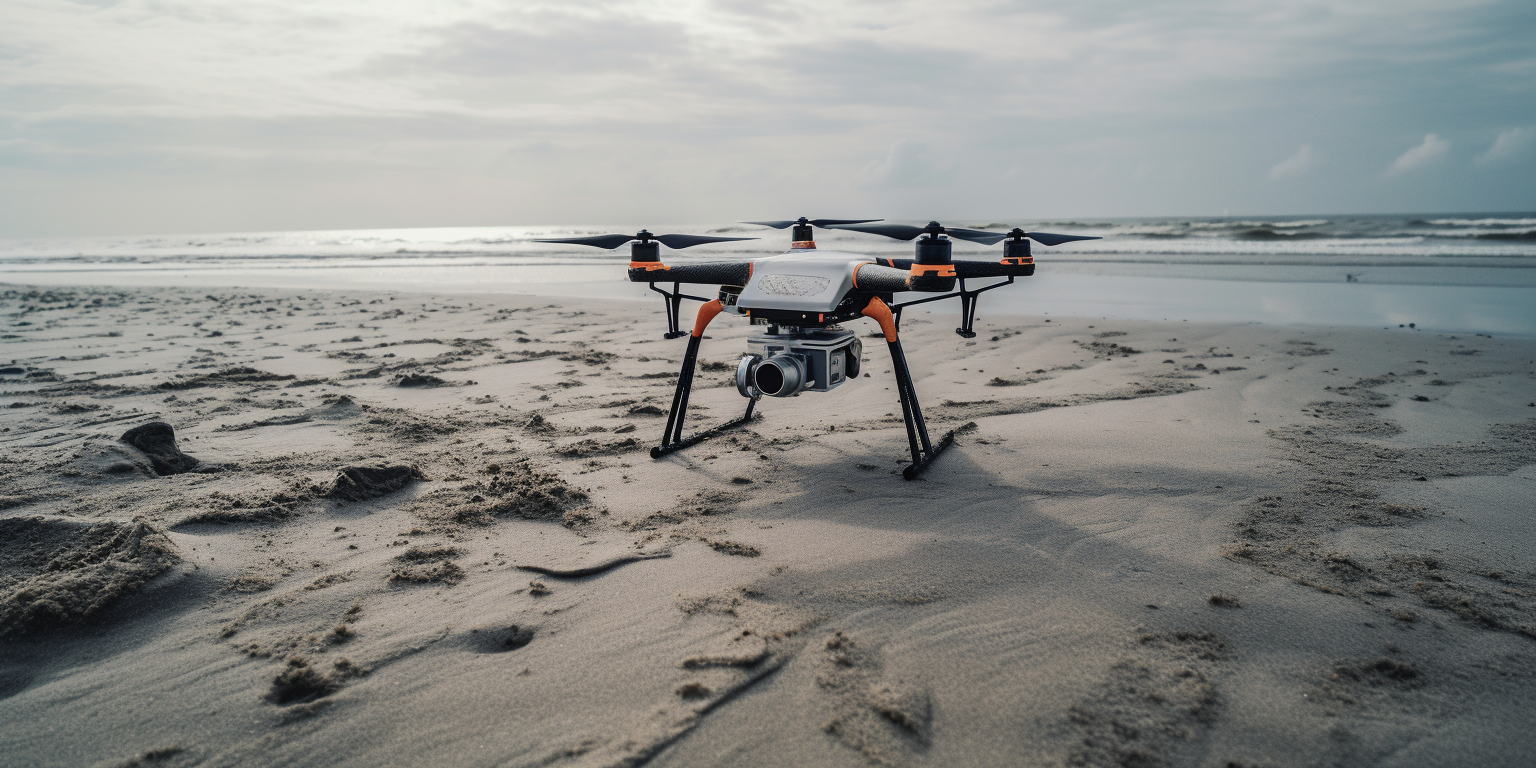
In today’s fast-paced tech landscape, Time-of-Flight (ToF) technology has become a cornerstone in the development of LiDAR (Light Detection and Ranging) systems and advanced drone platforms. From autonomous navigation and 3D terrain mapping to real-time environmental monitoring, the combination of ToF and LiDAR is reshaping how intelligent aerial systems perceive and interact with the world around them.
Understanding Time-of-Flight: The Science Behind Precision Sensing
ToF works by emitting light—typically infrared or laser—and calculating the time it takes for the light to reflect off an object and return to the sensor. This “time of flight” is then translated into highly accurate distance measurements.
Thanks to its nanosecond-level responsiveness and millimeter-scale precision, ToF has become a critical component in systems that require real-time depth sensing, such as depth cameras, environmental monitoring tools, and of course, LiDAR sensors embedded in modern drones and vehicles.
LiDAR Sensors and ToF: Enabling Next-Level Drone Vision
What Is a LiDAR Sensor?
LiDAR (Light Detection and Ranging) is a cutting-edge ranging technology that emits laser pulses to map surroundings in high detail. It uses ToF-based mechanisms to measure distances and construct 3D representations of the environment. Unlike passive imaging technologies, LiDAR can generate highly accurate and interference-resistant data in various conditions.

LiDAR not only produces depth maps but also creates rich 3D point clouds, making it indispensable for topographic mapping, obstacle detection, and autonomous flight path planning.
Drones with LiDAR: Redefining Aerial Intelligence
The convergence of LiDAR and drone technology is giving rise to a new class of intelligent aerial platforms: LiDAR Drones, Drones with LiDAR, and Drones for LiDAR mapping. These systems are now widely adopted across several critical sectors:
1. High-Accuracy 3D Mapping and Surveying
LiDAR Mapping Drones enable swift and precise 3D modeling of diverse terrains:
Generate high-resolution 3D models of urban and rural environments;
Feed data directly into GIS platforms for infrastructure planning;
Assist in disaster prediction and monitoring, such as flood modeling or landslide detection.

2. Environmental Sensing and Smart Monitoring
Equipped with ToF sensors, LiDAR Drones can integrate with multi-spectral and environmental modules:
Measure air quality, PM2.5, temperature, and humidity;
Track agricultural microclimates and crop health;
Detect wildfires and monitor emission levels in industrial zones.
This multi-sensor approach elevates the role of drones from passive observers to real-time environmental analysts, vital for smart city infrastructure, sustainable agriculture, and emergency response.
3. Intelligent Flight Vision and Navigation
By combining visual cameras with laser-based ToF sensors, drones can execute:
Accurate SLAM (Simultaneous Localization and Mapping) for real-time positioning;
Obstacle avoidance with instant detection of trees, buildings, or power lines;
Flight path optimization by analyzing 3D depth data, saving energy and increasing stability.
This fusion of ToF and visual data is pushing drone intelligence to new levels, enabling precise operations in cluttered, dynamic, or low-visibility environments.
The Future of Autonomous Vehicles Powered by ToF and LiDAR
In the world of autonomous driving, ToF-based automotive LiDAR sensors are playing a pivotal role. Mounted on self-driving cars, these sensors provide real-time 3D spatial information by emitting laser pulses and analyzing the reflections. Combined with radar, cameras, and GPS, they form the foundation of modern autonomous navigation systems.
Key Functions Enabled by ToF LiDAR in Vehicles:
360° Spatial Awareness: Real-time detection of pedestrians, vehicles, and infrastructure;
Path Planning: Smart route generation based on depth perception and high-definition maps;
Dynamic Obstacle Avoidance: Instant reactions to unexpected objects or road hazards;
All-Weather Reliability: Operates seamlessly in darkness, rain, fog, or snow—conditions where cameras often fail.
Why ToF Technology Is Leading the Way
1. Ultra-Fast Response Time
ToF sensors deliver distance data within microseconds, supporting high refresh rates essential for real-time 3D imaging in fast-moving environments.
2. Exceptional Accuracy
ToF-based systems can measure distances with millimeter precision—vital for both autonomous drones and self-driving vehicles.
3. Versatile Operation in All Conditions
Because ToF is not dependent on ambient light, it performs consistently in challenging scenarios, making it a go-to solution for night operations, bad weather, and indoor/outdoor environments.
What’s Next: AI + ToF for Smarter Perception
As AI and edge computing technologies mature, the fusion of ToF sensors with artificial intelligence is ushering in a new era of intelligent perception systems. Future drones and robots will do more than just measure distances—they’ll analyze, predict, and respond.
Future Capabilities Include:
Behavior Recognition: Identifying and tracking animals, humans, or vehicles;
Predictive Navigation: Anticipating movement trajectories and adjusting flight paths autonomously;
Semantic Scene Understanding: Leveraging neural networks to classify and interpret environments in real time.
The Evolution of ToF Drones in Environmental and Industrial Applications
As ToF and LiDAR technologies advance, we can expect:
1. Sensor Miniaturization
Next-gen ToF modules will be compact, lightweight, and energy-efficient, ideal for small UAVs. SoC integration will enable built-in flight control, navigation, and wireless data transmission.
2. Real-Time Smart Agriculture
LiDAR-equipped agricultural drones will optimize spraying and seeding by controlling altitude based on real-time terrain and crop data, minimizing waste.
3. Advanced Environmental Monitoring
Tiny drones embedded with ToF + environmental sensors will explore difficult terrains like forests, caves, and disaster areas, collecting vital data with unmatched agility.
4. Multi-Sensor Fusion Ecosystems
Combining ToF with other sensing technologies will unlock powerful new capabilities:
RGB + ToF: For enhanced object recognition and mapping;
Thermal + ToF: For rescue missions in smoke or darkness;
Air Quality + ToF: For aerial weather stations tracking real-time environmental parameters.
5. Extended Range and Sensitivity
With stronger lasers and better detectors, future ToF systems will scan longer distances, ideal for:
Mapping mountainous or forested areas;
Inspecting bridges, towers, and high-rise buildings;
Conducting rapid damage assessments after natural disasters.
Conclusion: ToF Is the Future of Spatial Intelligence
From simple distance measurement to deep spatial understanding, ToF technology is becoming the brain behind the next wave of aerial and autonomous perception systems. When combined with LiDAR, it empowers machines to not only see the world but also understand and respond to it intelligently.
Final Thoughts: LiDAR Drones + ToF = Smarter, Safer Skies
As LiDAR Drones and Drones for LiDAR mapping become more prevalent in industries ranging from urban planning and precision agriculture to public safety and autonomous transportation, ToF technology will remain the backbone of their sensing capabilities.
With continuous innovations in ToF sensors, environmental perception systems, and AI integration, the sky is no longer the limit—it’s the frontier of intelligent exploration.
Synexens Industrial Outdoor 4m TOF Sensor Depth 3D Camera Rangefinder_CS40p
After-sales Support:
Our professional technical team specializing in 3D camera ranging is ready to assist you at any time. Whether you encounter any issues with your TOF camera after purchase or need clarification on TOF technology, feel free to contact us anytime. We are committed to providing high-quality technical after-sales service and user experience, ensuring your peace of mind in both shopping and using our products.
- このできごとのURL:


コメント