Honjo Masamune: History, Craftsmanship, and Lost Samurai Sword Legend
(2026年03月09日)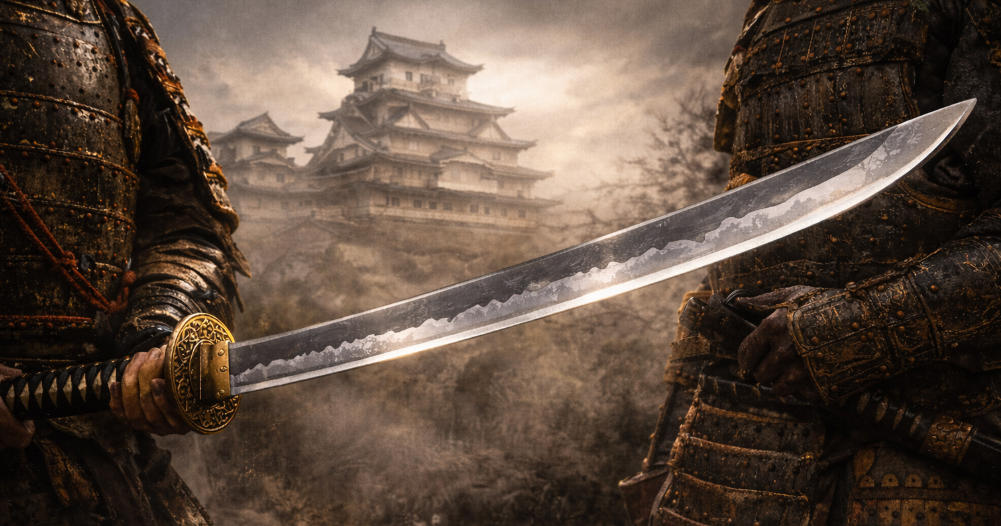
Honjo Masamune: History, Craftsmanship, and the Legendary Lost Samurai Sword
Among the countless legendary Japanese samurai swords, few are as famous or mysterious as the Honjo Masamune. Widely regarded as one of the greatest blades ever forged, this legendary katana sword represents the highest level of Japanese sword craftsmanship, traditional metallurgy, and the enduring spirit of the samurai warrior.
Forged by the legendary swordsmith Masamune, the Honjo Masamune became a symbol of power, authority, and prestige during Japan’s feudal era. It was once owned by powerful samurai leaders and eventually associated with the Tokugawa shogunate. Today, the sword is considered one of the most famous lost samurai swords in history, surrounded by myths, historical records, and unsolved mystery.
This article explores the history of the Honjo Masamune, the swordmaking genius of Masamune, the weapon’s role in Japanese history, and why it remains one of the most legendary katana swords ever created.
What Is the Honjo Masamune?
The Honjo Masamune is a legendary Japanese katana forged by the famous swordsmith Gorō Nyūdō Masamune, who lived during the late Kamakura period. Masamune is widely recognized as one of the greatest swordsmiths in Japanese history and is often referred to as the master of traditional Japanese sword forging.
Masamune swords are renowned for their:
Exceptional sharpness
Perfect blade balance
High durability and flexibility
Distinctive hamon temper line
Elegant curvature and cutting efficiency

Because of these qualities, Masamune blades became highly prized among samurai warriors and powerful feudal lords. Many historians consider Masamune’s work the pinnacle of authentic samurai sword craftsmanship.
The Honjo Masamune became the most famous sword associated with Masamune’s legacy.
Masamune and the Golden Age of Japanese Swordsmithing
The Kamakura period is often considered the golden age of Japanese swordmaking. During this time, the demand for high-quality weapons increased as samurai warfare expanded across Japan.
Masamune introduced revolutionary techniques that transformed katana forging and influenced generations of swordsmiths.
Advanced Steel Folding Technique
Traditional katana swords were made using a process of repeatedly folding steel. This technique removed impurities from the metal and created layered strength within the blade.
The result was a blade that was both strong and flexible, capable of withstanding intense combat.
Differential Clay Tempering
One of the defining features of Masamune’s swords is the beautiful hamon pattern. This temper line appears during the differential heat treatment process.
A clay coating is applied to the blade before quenching. The exposed edge cools faster than the spine, creating a hard cutting edge and a softer, flexible back.
This technique allowed Masamune swords to achieve an ideal balance between cutting power and durability.
Superior Blade Geometry
Masamune also perfected blade curvature, thickness distribution, and weight balance. These elements made his swords extremely effective for samurai sword fighting techniques, including both cutting and thrusting.
Because of these innovations, Masamune’s blades became legendary among samurai warriors.
The Origin of the Name Honjo Masamune
The name Honjo Masamune comes from the samurai general Honjo Shigenaga, who acquired the sword during a battle in Japan’s feudal era.
Historical accounts describe a dramatic encounter in which an enemy warrior struck Shigenaga with the sword. The blade reportedly split his helmet but failed to kill him. After defeating the attacker, Shigenaga claimed the sword as a trophy.
Although the blade was slightly damaged during the fight, it was later repaired. The weapon then became known as the Honjo Masamune, combining the owner’s name with the swordsmith who forged it.
This story contributed to the sword’s legendary reputation within samurai culture.
Honjo Masamune and the Tokugawa Shogunate
Over time, the Honjo Masamune passed through the hands of several powerful samurai families before eventually becoming associated with the Tokugawa shogunate.
During the Edo period, the sword became an important symbol of political power. It was passed from one Tokugawa shogun to the next and represented the authority and legitimacy of the ruling government.
Because of its historical importance, the Honjo Masamune was officially designated a Japanese National Treasure in the early twentieth century.
This recognition confirmed the sword’s status as one of the most valuable artifacts in Japanese history.
Structure of a Traditional Samurai Katana
Understanding the Honjo Masamune also requires understanding the components of a traditional Japanese katana sword. Each part of the weapon contributes to its function and aesthetic beauty.
Katana Blade
The blade is forged from high-carbon steel and shaped to create the distinctive curved profile associated with samurai swords.
Tsuka (Handle)
The tsuka is wrapped with silk or leather over rayskin. This design improves grip and control during combat.
Tsuba (Sword Guard)
The tsuba protects the wielder’s hand and often features detailed decorative designs inspired by Japanese culture and mythology.
Saya (Scabbard)
The saya is a lacquered wooden scabbard used to protect the blade when not in use. Samurai often wore the katana at the waist as part of their traditional equipment.
These elements combine to create a weapon that is both practical and artistic.
The Mystery of the Lost Honjo Masamune
Despite its legendary status, the Honjo Masamune disappeared after World War II.
Following Japan’s surrender, occupying forces required many Japanese families to surrender their weapons. The Honjo Masamune was reportedly handed over to authorities during this period.
After the confiscation, the sword vanished from official records and has never been recovered.
The disappearance of the Honjo Masamune remains one of the greatest mysteries in the world of historical weapons.
Several theories attempt to explain what happened to the sword:
It may have been taken overseas by a soldier as a war souvenir
It could exist in a private collection somewhere in the world
It may have been lost during postwar weapon processing
Regardless of the truth, the blade’s fate remains unknown.
Cultural Influence of the Honjo Masamune
Even though the original sword has never been found, the legend of the Honjo Masamune continues to influence modern culture.
Samurai Movies and Historical Dramas
Legendary swords inspired by Masamune frequently appear in samurai films and television series.
Anime and Video Games
Many anime series and video games include swords named Masamune, often portrayed as powerful or mythical weapons.
Sword Collecting and Replicas
Modern collectors and martial arts practitioners are fascinated by hand forged katana swords inspired by Masamune’s legendary blades.
Replica samurai swords are popular among collectors, historians, and enthusiasts of Japanese martial traditions.
Why the Honjo Masamune Remains Legendary
The legend of the Honjo Masamune continues to captivate historians and sword enthusiasts for several reasons.
First, the sword represents the highest level of traditional Japanese swordsmithing.
Second, it played a role in the political history of Japan during the era of the Tokugawa shoguns.
Finally, the mysterious disappearance of the blade after World War II adds an element of intrigue that has fascinated researchers for decades.
Because of these factors, the Honjo Masamune remains one of the most famous samurai swords, legendary katana weapons, and lost historical artifacts in the world.
Conclusion
The Honjo Masamune is more than just a sword. It is a symbol of samurai tradition, master craftsmanship, and historical mystery.
Forged by the legendary swordsmith Masamune during the golden age of Japanese swordmaking, the blade became a treasured weapon of powerful samurai leaders and a symbol of the Tokugawa shogunate.
Although the sword disappeared after World War II, its legacy continues to inspire historians, collectors, martial artists, and enthusiasts of Japanese katana swords around the world.
The story of the Honjo Masamune reminds us that some artifacts transcend their physical existence. Even without the original blade, the legend of this extraordinary samurai sword continues to live on through history, culture, and the enduring fascination with the art of Japanese swordmaking
https://www.coolkatana.com/
- このできごとのURL:


コメント