How ToF Technology Transforms Virtual Try-On and Smart Shopping
(2025年12月03日)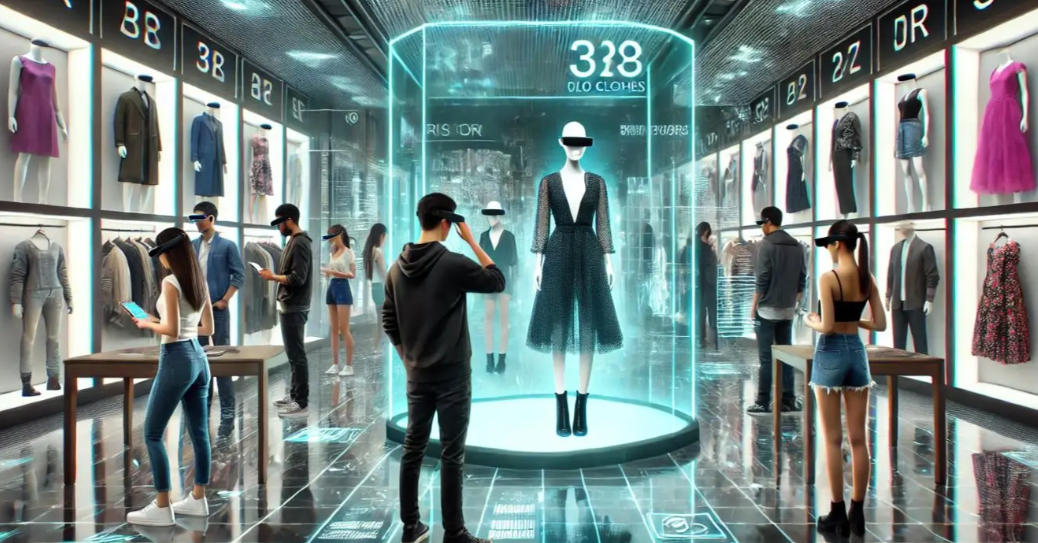
How ToF Technology Transforms Virtual Try-On and Smart Shopping Experiences
(SEO-Optimized Article with High-Volume Keywords and Long-Tail Phrases)
As retail accelerates toward digital transformation and consumers demand personalized, contactless, and immersive shopping journeys, Virtual Try-On Systems and Smart Fitting Mirrors have emerged as essential innovations. By integrating Time-of-Flight (ToF) 3D sensing, retailers can unlock highly accurate body scanning, realistic fitting visualization, and AI-driven fashion recommendations—ultimately redefining both in-store and online shopping experiences.
Today, ToF-powered virtual fitting technologies play a central role in bridging the gap between physical retail and e-commerce. Their ability to deliver real-time depth perception, full-body 3D modeling, and intelligent garment simulation makes them one of the most important components in the future of smart retail.
What Is ToF (Time-of-Flight) Technology?
Time-of-Flight (ToF) is an advanced depth-sensing technology that measures distance based on the travel time of emitted light pulses. A ToF camera projects infrared or laser light, captures the reflected signal, and calculates the time difference to generate high-precision 3D depth maps.
Key Advantages of ToF Sensors
• Millimeter-level accuracy: Captures highly detailed body contours and shapes.
• Real-time performance: Ideal for dynamic try-on, gesture control, and interactive retail.
• Strong ambient light resistance: Stable in shopping malls and brightly lit environments.
• Compact design: Easy integration into smart mirrors, kiosks, mobile devices, and AR/VR headsets.
These advantages enable ToF to outperform traditional 2D cameras and structured light systems, especially in full-body scanning and real-time virtual try-on scenarios.

Why Retail Needs ToF Virtual Try-On Technology
The rise of e-commerce has reshaped consumer expectations. Shoppers no longer want generic size charts; they expect accurate, customized fitting guidance and a frictionless hybrid shopping experience.
Virtual fitting mirrors deliver exactly that—leveraging ToF + AI + AR rendering to deliver:
Realistic try-on without physically wearing clothes
Personalized sizing and style recommendations
Contactless, hygienic fitting (highly demanded post-pandemic)
Data-driven retail insights to reduce return rates and improve product design
At the core of this innovation lies ToF depth sensing, which enables reliable, precise, and instant 3D human reconstruction—making virtual fitting commercially viable at scale.
Core Functions of ToF in Smart Fitting and Virtual Try-On
1. High-Precision Body Scanning & Full-Body 3D Reconstruction
ToF sensors capture millions of depth points per second, generating accurate 3D point clouds for instant full-body digital modeling.
Capabilities:
Accurate body measurements: height, chest, shoulder width, waist, hip circumference, arm/leg length
Dynamic posture tracking: supports real-time poses and movements
AI-assisted body analysis: identifies shape classifications and size recommendations
Instant avatar generation: creates personalized 3D avatars within seconds
Compared to RGB cameras, ToF provides stronger interference resistance, enabling reliable scanning even in changing lighting conditions or crowded retail floors.
This precision makes ToF ideal not only for fashion retail but also for:
Fitness assessment
Custom tailoring
Health monitoring
Ergonomics and digital human modeling
2. Realistic Virtual Try-On & Clothing Simulation
After building a precise 3D avatar, virtual try-on systems use ToF depth data to render lifelike garment behavior.
Key Features:
Physics-based fabric simulation: realistic draping, stretching, and movement
Accurate fitting visualization: shows real-world tension, folds, and fabric reactions
Scenario-based try-on: preview outfits for business, sports, and casual settings
AI color & style recommendations: matches garments to body shape and skin tone
Motion tracking: clothing moves naturally as the user walks or turns
This creates a highly immersive “try-before-you-buy” experience that boosts customer confidence and reduces return rates.
3. AI-Driven Recommendations and Smart Shopping Assistance
When ToF depth data is fused with machine learning and cloud analytics, virtual fitting systems evolve into intelligent retail assistants.
Benefits:
Personalized size predictions based on body metrics and brand sizing
Smart outfit recommendations using body shape, color preferences, and fashion trends
Customer behavior analytics for better inventory planning

Gesture and voice control: enabling intuitive, touch-free operation
Anonymous body-shape profiling: helping retailers understand customer demographics
This integration enhances both user engagement and operational efficiency, enabling data-driven, personalized smart retail ecosystems.
Technical Challenges & Solutions for ToF in Retail
While ToF technology is highly promising, the retail environment presents several challenges. Overcoming these issues is crucial for maintaining accuracy, responsiveness, and stability.
1. Precision and Human Detail Reconstruction
Clothing, hairstyles, and accessories often obscure body features, causing incomplete data.
Solutions:
Multi-frame fusion to capture details from different angles
AI-based point cloud completion for restoring missing contours
Hybrid sensors (ToF + RGB + IMU) for richer spatial and color information
Edge refinement algorithms to enhance surface smoothness
These techniques ensure consistent, accurate full-body models even in complex real-world conditions.
2. Real-Time Interaction and Low-Latency Rendering
High-resolution ToF data requires substantial computation.
Solutions:
Edge AI processing for near-instant avatar generation
GPU-accelerated rendering for fluid responsiveness
Lightweight neural networks optimized for rapid inference
Dynamic resource allocation across scanning, rendering, and tracking tasks
With these enhancements, virtual fitting mirrors can achieve sub-50ms latency, ensuring smooth, real-time try-on performance.
3. Environmental Adaptability in Retail Stores
Shopping environments include reflective floors, variable lighting, moving crowds, and IR interference.
Solutions:
Multi-frequency ToF modulation to reduce multi-path reflections
Ambient light suppression algorithms
Auto-gain and exposure control based on environmental brightness
Infrared anti-interference filters to maintain stable depth imaging
These improvements enable consistent performance across stores, malls, and exhibition spaces.
Best Practices for Retailers Deploying ToF Virtual Try-On Systems
To maximize performance and user satisfaction, retailers should adopt the following strategies:
✔ Integrate ToF + AI Modules
Enhance posture detection, multi-user recognition, and fitting accuracy.
✔ Use Edge Computing with Cloud Collaboration
Achieve low-latency rendering and fast data synchronization.
✔ Apply Multi-Sensor Fusion
Combine ToF with RGB cameras, IMUs, and structured light for superior realism.
✔ Build Personalized User Profiles
Store customer measurement history and preferences securely to enhance future experiences.
✔ Optimize Store Layout & Lighting
Ensure stable depth sensing by adjusting mirror placement and environmental illumination.
Future Outlook: ToF + AI + Cloud Will Define Next-Generation Smart Retail
As ToF sensor resolution improves and AI algorithms evolve, virtual try-on technology will move toward:
Full-body, ultra-realistic 3D try-on
AI-curated style recommendations and personalization
Seamless cross-platform user profiles
Real-time inventory matching with user selection
Connected retail ecosystems linking online and offline data
ToF-powered virtual fitting mirrors will ultimately help brands reduce returns, increase conversions, improve operational efficiency, and deliver truly immersive, intelligent, and personalized smart shopping experiences.
Synexens 3D Of RGBD ToF Depth Sensor_CS30
SHOP NOWhttps://tofsensors.com/collections/time-of-flight-sensor/products/rgbd-3d-camera
After-sales Support:
Our professional technical team specializing in 3D camera ranging is ready to assist you at any time. Whether you encounter any issues with your TOF camera after purchase or need clarification on TOF technology, feel free to contact us anytime. We are committed to providing high-quality technical after-sales service and user experience, ensuring your peace of mind in both shopping and using our products.
- このできごとのURL:


コメント