CES 2026 Showcases China’s Leadership in AI-Powered Humanoid Robotics
(2026年01月28日)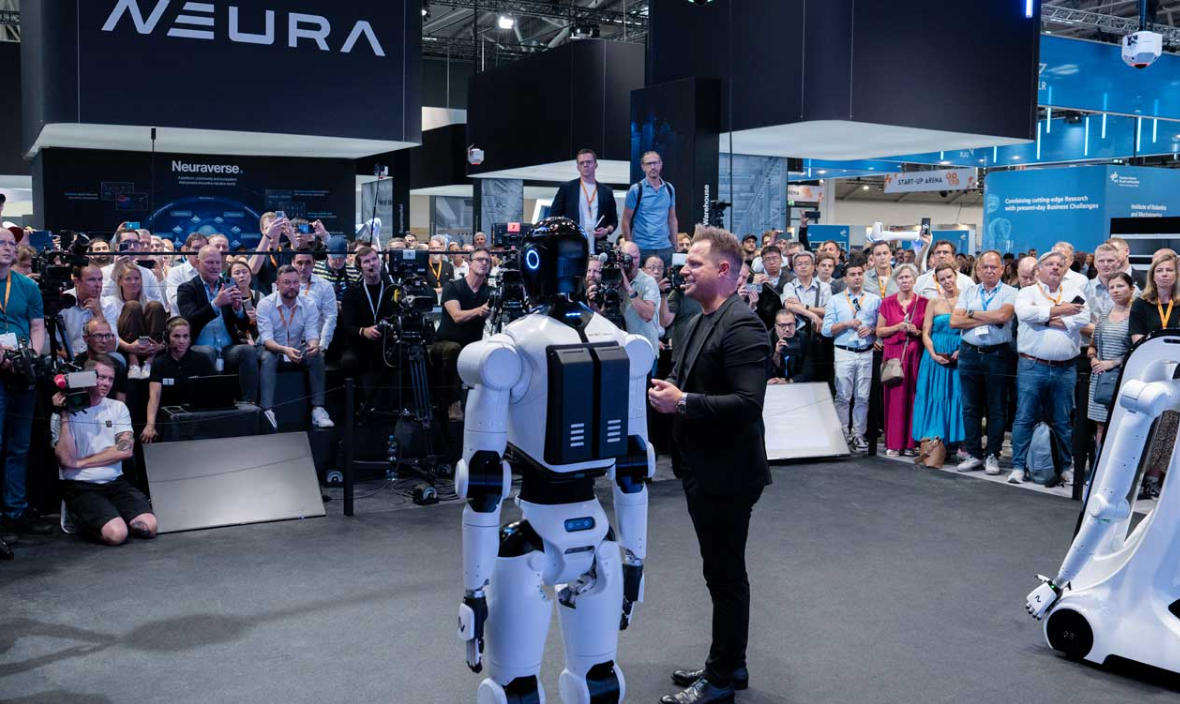
CES 2026 Robots Take Center Stage
Chinese Companies Lead the Era of AI and Embodied Intelligence
Las Vegas Report
At the recently concluded 2026 Consumer Electronics Show (CES 2026) in Las Vegas, robotics and artificial intelligence emerged as one of the most dominant themes of the event. Compared with previous editions, robots were no longer showcased merely as experimental concepts or technical demonstrations. Instead, they appeared as increasingly mature products with clearly defined application scenarios, signaling a decisive shift toward real-world deployment and large-scale commercialization of intelligent robots.
Driven by the deep integration of large AI models, embodied intelligence, multimodal perception systems, and advanced motion control, robotics technology is rapidly evolving. Robots are transitioning from single-function machines into intelligent agents capable of environmental understanding, autonomous decision-making, and task execution, marking a critical step toward the next generation of general-purpose robotics.
Record Participation of Humanoid Robots, China Becomes a Key Force
In terms of exhibition scale, CES 2026 recorded a historic high in the number of humanoid robot companies participating in the event. More than 30 companies specializing in humanoid robots and embodied AI showcased their latest products, core technologies, and future roadmaps. Notably, Chinese companies accounted for nearly half of the exhibitors, making China one of the most visible and influential forces in the global robotics landscape.
This trend highlights not only the rapidly growing international presence of China’s robotics and AI industry, but also the accelerated formation of a global competitive ecosystem centered on embodied intelligence and humanoid robotics. Chinese firms are increasingly positioned as key contributors rather than followers in this emerging field.
Technological Breakthroughs Enable Real-World Performance
From a technological perspective, the robots presented at CES 2026 demonstrated a significant leap in overall capability. Unlike earlier generations that focused primarily on pre-programmed actions and choreographed movements, the new wave of robots emphasized real-world operational performance and adaptability.
Several exhibitors demonstrated robots capable of precision grasping, dynamic balance, autonomous obstacle avoidance, and stable operation in unstructured environments. These advancements are powered by breakthroughs in generative AI, multimodal sensor fusion, reinforcement learning, and high-performance motion control algorithms, enabling robots to achieve more human-like perception, judgment, and responsiveness.
China Showcases Strength Across the Full Robotics Value Chain
Chinese exhibitors at CES 2026 showcased strengths that extended well beyond complete robot systems. Across the exhibition floor, companies presented innovations spanning the entire robotics value chain, including dexterous robotic hands, joint modules, high-precision sensors, structural components, intelligent control platforms, and robot operating systems.

Several firms also unveiled fully integrated, end-to-end robotics solutions built on proprietary hardware and algorithms. This demonstrated the growing system integration capabilities and technological independence of China’s robotics ecosystem, as well as its ability to support large-scale industrialization.
Clearer Application Scenarios Accelerate Commercialization
Another defining feature of CES 2026 was the increasing clarity of robot application scenarios. In addition to traditional industrial and manufacturing robots, service robots designed for logistics, healthcare, retail, household assistance, and public environments attracted significant attention.
Robots are no longer confined to futuristic visions. Instead, they are steadily entering production systems, service industries, and everyday life, supported by more realistic cost structures and clearer commercialization pathways. This shift reflects the industry’s broader transition from concept validation to application-driven deployment.
AI and Robotics Converge to Shape the Next Decade
Overall, CES 2026 served not only as a global consumer electronics showcase, but also as a key observation window into the convergence of artificial intelligence and robotics. Innovation within the industry is moving away from demonstration-focused development toward scalable, application-oriented solutions.
As AI technology, embodied intelligence, humanoid robots, and industrial ecosystems continue to mature, robotics is expected to become a major driving force behind global technological progress and industrial transformation over the next decade. Chinese companies, in particular, are poised to play an increasingly influential role in shaping this future.
https://tofsensors.com
- このできごとのURL:


コメント